

Foot Drop
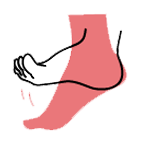
Foot Drop describes the inability to raise the front part of the foot due to weakness or paralysis of the muscles that lift the foot. As a result, individuals with foot drop scuff their toes along the ground or bend their knees to lift their foot higher than usual to avoid the scuffing, which causes a “steppage” gait.
What we treat
Treatment depends on the specific cause of foot drop. The most common treatment is to support the foot with light-weight leg braces and shoe inserts, called ankle-foot orthotics (AFO). Exercise therapy to strengthen the muscles and maintain joint motion helps improve gait.
The Prognosis for Foot Drop
The prognosis for foot drop depends on the cause. Foot drop caused by trauma or nerve damage usually shows partial or even complete recovery.
For progressive neurological disorders, foot drop will be a symptom that is likely to continue as a lifelong disability, but it will not shorten life expectancy. Often the treatment will change; alternative orthotic solutions are usually applied for changing stages of the condition.
How MoveMe can Help
Orthotic Consultation for treatment or prevention of foot drop, including measurement/fitting, can be arranged by our qualified clinical team – contact us for more information on what is available or book.
Questions
What are the causes of Foot Drop?
Foot drop can be unilateral (affecting one foot) or bilateral (affecting both feet).
Foot drop is a symptom of an underlying problem and is either temporary or permanent, depending on the cause.
Causes include: neurodegenerative disorders of the brain that cause muscular problems, such as:
- multiple sclerosis, stroke, and cerebral palsy
- motor neuron disorders such as polio
- some forms of spinal muscular atrophy and amyotrophic lateral sclerosis (commonly known as Lou Gehrig’s disease)
- injury to the nerve roots, such as in spinal stenosis
- peripheral nerve disorders such as Charcot-Marie-Tooth disease or acquired peripheral neuropathy
- local compression or damage to the peroneal nerve as it passes across the fibular bone below the knee
- muscle disorders, such as muscular dystrophy or myositis.
HOW MOVE ME HELPS
How we support Foot Drop
Our clinicians fit orthoses and supports matched to your symptoms, activity level and goals.
Book an orthotic consultation- Clinical assessment Gait and function reviewed in clinic
- Orthotic fitting Ready-to-wear or custom devices
- Follow-up care Adjustments as your needs change
- Footwear advice Shoes that work with your supports
- Product options Order replacements when you need them
- Referral support We work with your care team
Treatment areas
-
Ankle orthoses, particularly in Custom Made AFO's (Ankle foot orthosis) is our area of expertise. These can be either ready to wear or custom made depending on your bracing needs.
-
Footwear is suitable for a range of needs to support you, with various options from ready-to-wear to custom-made, all perfectly suited to your particular needs.
-
We support children's orthoses needs with our range of Paediatrics orthoses that can be custom-made or ready-to-wear solutions.